


Customs officials trained on tariff classification system ahead of Uzbekistan’s WTO accession
31.12.2025 940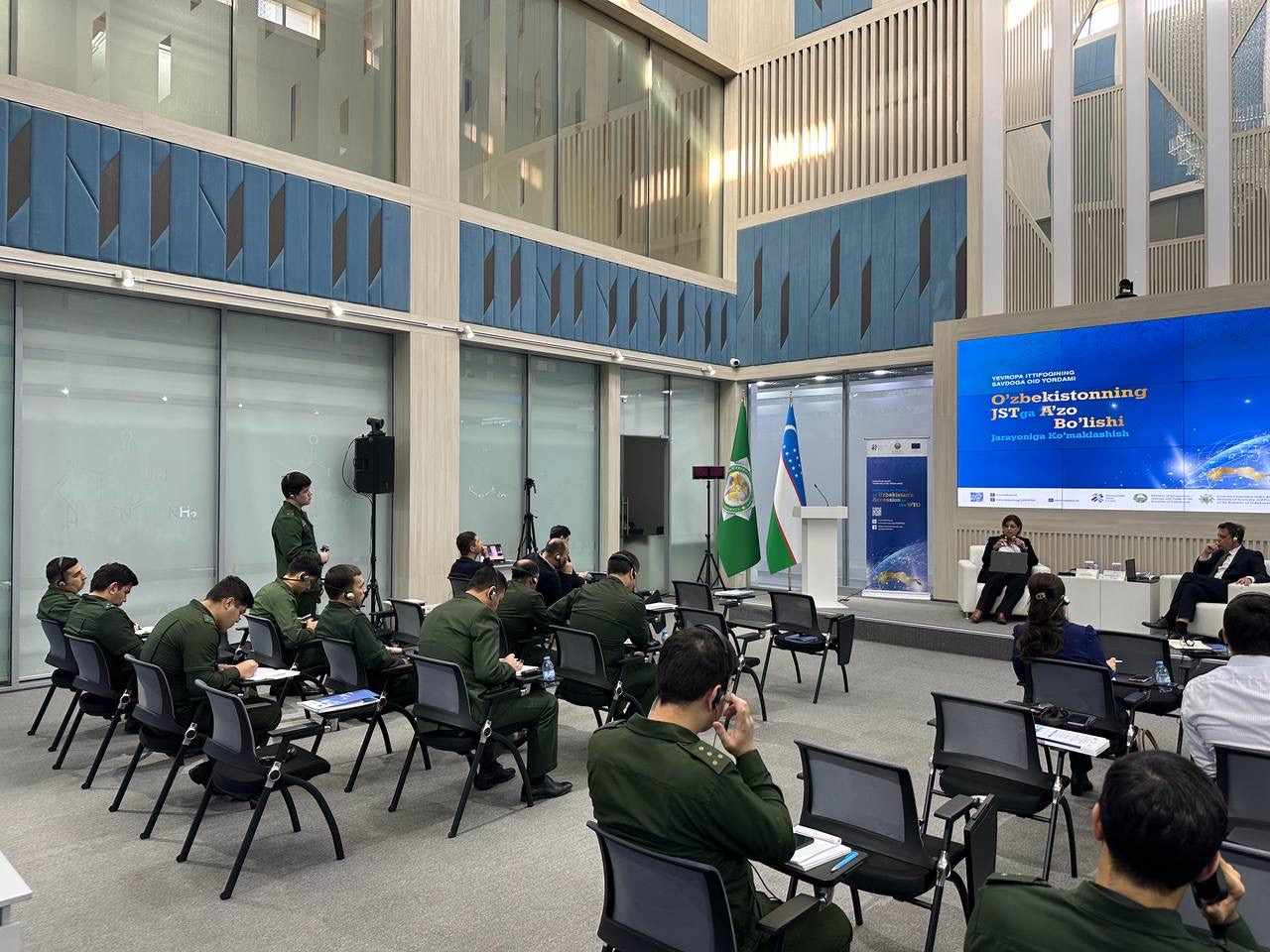
In preparation for Uzbekistan’s impending accession to the World Trade Organization, officials of the Customs Committee received extensive training on the uniform tariff classification system used by countries to classify goods in international trade.
While it is not formally part of the WTO Agreement, the Harmonized System – also known as HS – is a systematic list used to classify goodsused by most trading nations.
Developed by the World Customs Organization, the HS comprises more than 5 000 commodity groups; each identified by a six-digit code. More than 200 countries and economies use it for their customs tariffs and for the collection of international trade statistics.
The HS facilitates coordinated customs and trade procedures, easing data exchanges on trade procedures, all of which also helps to reduce the cost of global trade. The correct application of the HS is a key condition for ensuring compliance with WTO commitments and transparency requirements and is therefore of particular relevance for Uzbekistan’s WTO accession efforts.
Uzbekistan’s WTO accession team requested the training to ensure the National Customs Committee becomes acquainted with the practical elements of implementing the HS system in the context of accession and WTO membership. The ITC therefore organized a five-day training from 17 to 21 November 2025 in Tashkent.
The seminar was opened by the chair of the Customs Committee, Akmalkhuja Mavlonov, as well as Azizbek Urunov, Representative of the President of Uzbekistan on the WTO, and the country’s Chief Negotiator at the WTO.
Dealing with challenges
To set the scene, Uzbekistan’s responsible team presented their experience with the classification infrastructure and the challenges they face. The criteria for the creation of new headings and subheadings were discussed as well as elements for consideration with the formation of HS codes at the national level.
The training dealt with the EU’s Combined Nomenclature (CN), which is a further development of the WCO’s HS and an 8-digit coding system. The officials learned what the differences are between the HS and the EU’s CN, and the additional elements that have to be taken into account to meet the needs of the European market were set out.
Time was also dedicated to General Interpretative Rules (GIRs), covering the text and scope of the rules and clarifying key concepts such as ‘incomplete’, ‘unfinished’, ‘assembled’ and ‘disassembled’ goods.
It also dealt with practical cases such as the classification of parts, components and ‘semi-finished products’.
Instruments and tools to ensure accurate classification in the HS were introduced, and the consequences of misclassification were explained.
The high-profile seminar was one of the last trainings to be held under the EU project dedicated to “Facilitating the process of Uzbekistan’s accession to the WTO” before its conclusion in December 2025.